
by: Leslie Bonilla Muñiz
Indiana Capital Chronicle
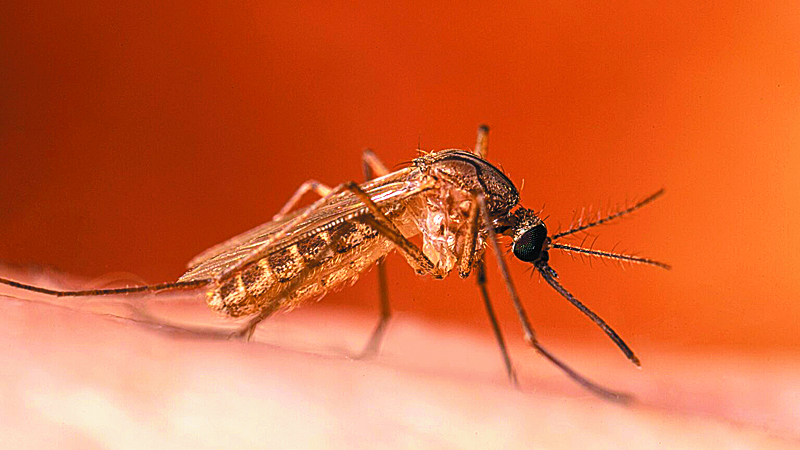
West Nile virus is most commonly spread through the bite of an infected mosquito.
A Vanderburgh County resident has Indiana’s first case of West Nile virus for the year, the Indiana Department of Health reported last week.
And nearby Louisville, KY has reported multiple cases of the disease
The virus is most commonly spread through the bite of an infected mosquito. More cases are expected as mosquito season continues.
West Nile virus activity has also been detected in mosquitoes throughout the state — in 56 samples taken from 15 counties.
“With large amounts of recent rainfall and projected high temperatures continuing this week, Hoosiers in all parts of the state should take steps to remove breeding sites around their homes,” said State Health Commissioner Dr. Lindsay Weaver.
Her agency pushed Hoosiers to take precautions against West Nile virus and other mosquito-borne viruses like Eastern equine encephalitis — also known as the triple-E virus — and La Crosse virus:
•Use insect repellent. Look for ingredients like DEET, picaridin, IR3535, oil of lemon eucalyptus, para-menthane-diol or 2-undecanone and apply according to the instructions on the packaging.
•Wear protective clothing. Try loose-fitting, long-sleeved shirts and pants. Consider treating the clothes and other gear with a permethrin product.
•Install screens on windows and doors. Repair or cover tears.
•Look for containers that could hold water— mosquitoes can breed in a bottle cap worth of water— and prevent the insects from accessing them. This can be done by removing trash, moving items indoors, covering or overturning items not in use, drilling holes in the bottom of trash containers, installing screens on rain barrels, replacing water in pet bowls daily and flushing birdbaths, fountains, and other containers at least once a week.
•Maintain your property. This includes regularly servicing septic systems, keeping grass mowed and shrubs trimmed, cleaning gutters regularly, and aerating ornamental pools or stocking them with fish.
Most people infected with West Nile virus have no symptoms— or mild, flu-like symptoms. Those include fever, headache, body aches, joint pains, vomiting, diarrhea or a rash.
A small number will develop a more severe form of disease affecting the nervous system. It can lead to inflammation in the brain and spinal cord, muscle paralysis and death.
People older than 60 years and those with weakened immune systems— due to cancer, diabetes, kidney disease, organ transplant or other conditions— face a greater risk of severe illness.
People who think they may have the virus should see their health care providers, the agency concluded.